
A Practical Guide for Irish Businesses
Building a strong social media presence is one of the most effective ways for businesses to attract customers, build trust, and drive growth in today’s digital world.
But knowing you should be on social media and knowing what to actually do on it are two very different things.
Maybe you’re not sure what to post. Maybe you’ve tried posting but saw little engagement. Or maybe your accounts exist, but they feel inconsistent, inactive, or disconnected from the real goals of your business.
Instead of generating leads or building trust, social media starts to feel like another task on an already long to-do list.
You’re not alone in this. Many businesses struggle with the same challenge: showing up online in a way that actually attracts attention, builds credibility, and leads to real opportunities.
At the same time, the potential is massive. According to DataReportal’s Digital 2025 Global Overview Report, there are more than 5.6 billion active social media identities worldwide – roughly 68% of the global population. For many potential customers, social media is now the first place they encounter and evaluate a business.

But social media is not just about visibility, it also plays a key role in how trust develops. In marketing psychology, the “Rule of 7” suggests that people typically need multiple interactions with a brand before they are ready to buy.
Whether that number is seven, eleven, or even more in today’s crowded digital environment, the core idea remains the same: familiarity builds trust.
Social media allows businesses to build that familiarity consistently. Even when someone isn’t ready to buy today, helpful and relevant content keeps your brand present in their mind.
The real question isn’t whether your business should be on social media. It’s how to show up in a way that works to build.
In this guide, we’ll walk through a clear approach to building a strong social media presence that feels purposeful, consistent, and aligned with your business goals, so you’re not just posting content, but creating visibility, trust, and opportunities for growth.

- Strategy why you are on social media and what success looks like
- Brand how your business shows up and builds trust
- Content what you publish and how it performs
When these three elements work together, social media becomes far more than a posting routine, it becomes a long-term business asset.
What Is Social Media Presence?
A strong social media presence is the overall identity and visibility of your brand across social platforms.
It includes several elements working together:
- your visual identity and branding
- your tone of voice
- how often you post
- how you interact with your audience
- the value of the content you publish
- and the trust signals visible on your profile
A strong presence helps people answer three key questions quickly:
- What does this business do?
- Can I trust it?
- Is it relevant to me?
If visitors cannot answer those questions within a few seconds, your social media presence is likely weaker than it could be.
Why Strong Social Media Presence Matters Even More in 2026
Social media is no longer simply a marketing add-on. It now plays a central role in discovery, trust, and purchasing decisions.
Social media has become a discovery engine
For many users, social platforms are replacing traditional search.
Google itself noted that almost 40% of younger users turn to platforms like TikTok or Instagram instead of Google Search when looking for places to eat or explore.
Customers expect brands to be active and responsive
Authenticity matters more than perfection
According to the Sprout Social Index, authenticity is the most important characteristic consumers want to see from brands on social media. Overly polished content can sometimes feel less trustworthy than simple, genuine communication.
Social media increasingly drives sales
Social commerce continues to grow rapidly. Forecasts from EMARKETER estimate that social commerce will surpass $1 trillion globally within the next few years, driven by platforms like TikTok, Instagram, and YouTube.
Even when sales happen off-platform, social media often influences the decision. This is why strong social media presence is crucial.
Part 1: Social Media Strategy
Before thinking about posts or videos, businesses need a clear strategy. Strategy determines why you are on social media and what you want it to achieve.
1. Set Clear Business Goals
One of the most common mistakes businesses make is posting regularly without defining what success actually means.
Without goals, social media becomes a vague activity rather than a strategic tool.
Use a SWOT Analysis to Clarify Your Social Media Strategy
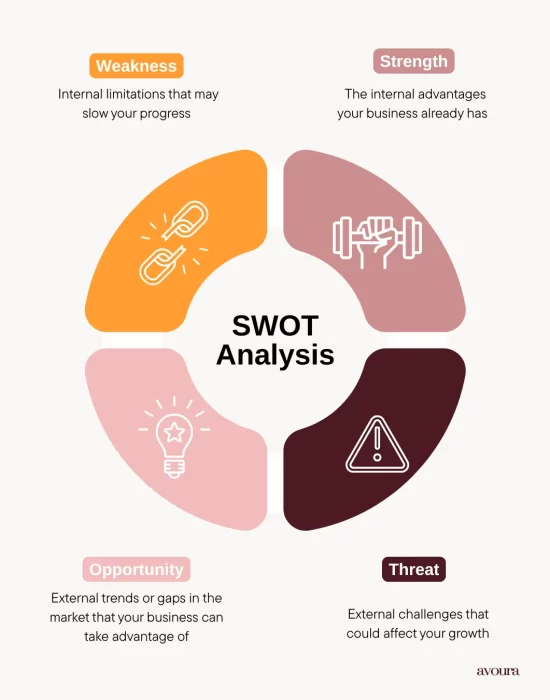
Before setting detailed social media goals, it can be helpful to evaluate your current situation using a SWOT analysis. This simple framework helps businesses understand where they stand and where social media can create the most impact.
A SWOT analysis examines four key areas:
Create a simple SWOT table for your business before building your social media strategy.
Example:
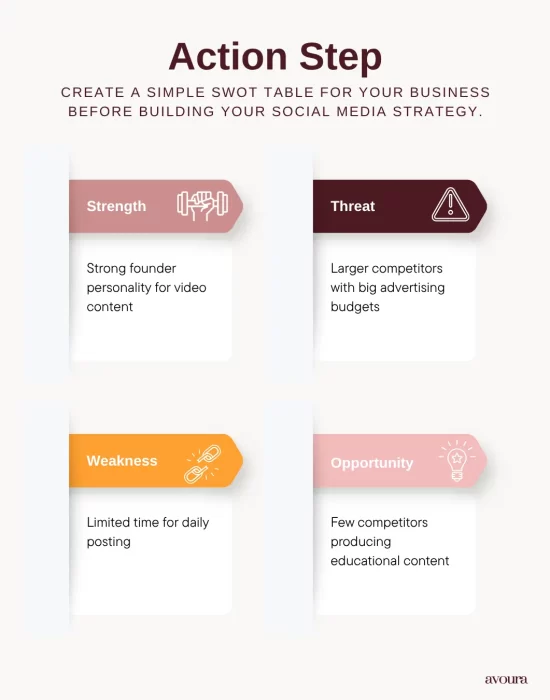
This exercise helps businesses build a strategy grounded in reality, rather than guessing what might work
2. Identify Your Target Audience
A strong strategy and social media presence begins with knowing exactly who your content is meant for.
Posting content aimed at everyone usually results in content that resonates with no one.
Instead, focus on understanding:
- the problems your audience faces
- the questions they ask most often
- what motivates them to buy
- what content they already consume
Research from HubSpot consistently shows that content aligned with audience needs generates significantly higher engagement and conversion rates.
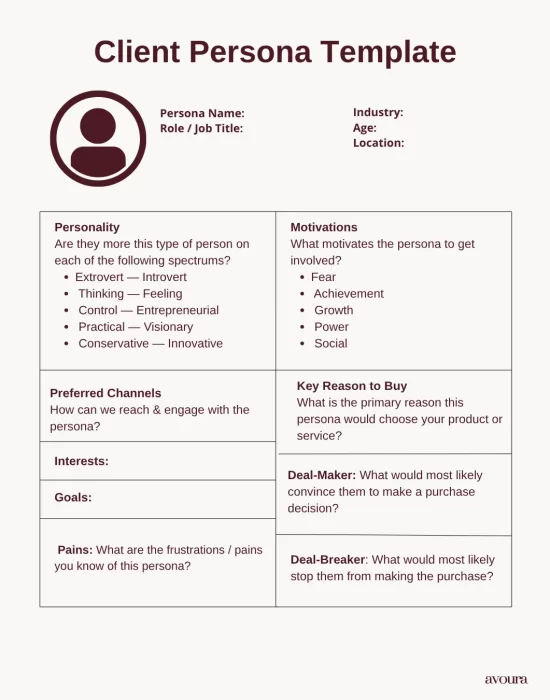
Action step:
Create 1-3 audience profiles describing your ideal customers, including their goals, frustrations, and preferred platforms.
3. Choose the Right Platforms
Not every business needs to be active everywhere.
Trying to maintain six platforms usually spreads resources too thin. A stronger approach is to focus on the platforms where your audience already spends time.
General platform strengths:
Instagram – brand visibility, visual storytelling, lifestyle businesses
LinkedIn – B2B marketing, thought leadership, recruitment
TikTok – discovery and fast reach
YouTube -long-form education and search visibility
Facebook – local communities and older demographics
Action step:
Focus on one primary platform and one secondary platform before expanding further.
4. Define Success Metrics
Posting frequently is not the same as making progress.
Tracking the right metrics helps businesses understand what actually moves the needle.
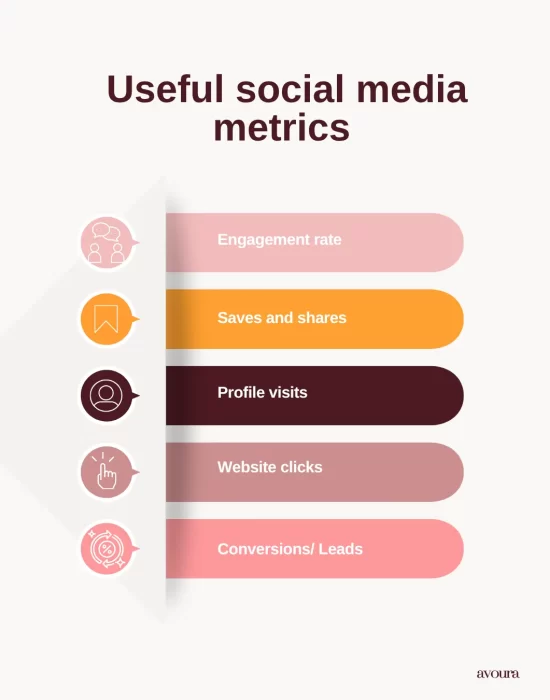
Sprout Social reports that businesses measuring social media performance against business outcomes see significantly stronger ROI from their social strategies.
Action step:
Choose 3-5 metrics that align with your business goals and review them monthly.
Part 2: Building a Strong Social Media Presence
Once the strategy is clear, the next step is building a presence people can recognize and trust.
1. Develop a Clear Brand Voice
Your brand voice is how your business sounds online.
Consistency matters because it helps audiences recognize your content even before seeing your logo.
For example:
- A law firm might adopt a calm, authoritative tone
- A startup might use a more conversational and energetic voice
- A lifestyle brand might be playful and visual
Authenticity is critical. The Sprout Social Index reports that 86% of consumers say authenticity influences the brands they support.
Action step:
Define 3–5 voice traits (e.g., clear, friendly, expert, practical) and apply them consistently.
2. Make Your Profile Instantly Clear
Your profile should communicate your value within seconds.
A strong social profile includes:
- a clear bio explaining what you do
- a recognizable profile image
- consistent branding
- links to key pages
- a clear call to action
Think of your profile as a digital storefront.
Action step:
Review your profile from a visitor’s perspective: can someone understand your business in five seconds?
Strong Instagram Bio Examples:


3. Show Up Consistently
Consistency builds familiarity.
Research in marketing psychology shows that repeated exposure increases trust and recall one reason brands invest so heavily in regular visibility.
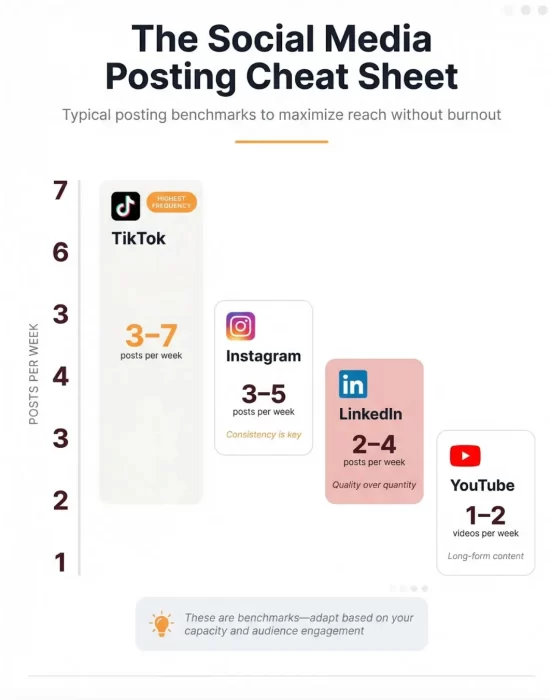
Consistency does not mean posting constantly.
Instead, aim for a rhythm that your team can sustain.
Action step:
To grow a strong Strong Social Media Presence Choose a posting schedule you can maintain for at least three months.
4. Engage With Your Audience
Social media is not only about broadcasting content – it is about interaction.
Responding to comments and messages helps build stronger relationships and signals to platforms that your content is meaningful.
Research from Sprout Social shows that almost three-quarters of consumers expect brands to respond within 24 hours.
Action step:
Treat comments and direct messages as opportunities to build trust.
5. Build Trust Before Selling
The strongest brands on social media do not constantly push sales.
Instead, they provide value first.
Trust is built through:
- educational content
- transparency
- customer stories
- testimonials
- behind-the-scenes insights
A well-handled customer interaction or honest story can build more credibility than a polished advertisement.
Action step:
Ensure your profile includes visible proof — testimonials, case studies, or examples of your work.
Part 3: Creating Content That Works
Content is where strategy and presence come together.
1. Create Content Pillars
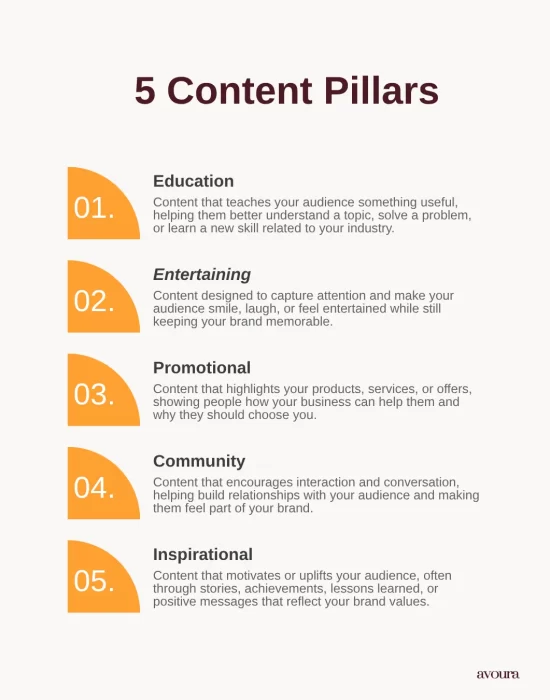
Content pillars are the core themes your brand consistently talks about.
Action step:
Choose 3–4 pillars to guide your content planning.
2. Prioritize Value-Driven Content
Most successful brands follow a value-first approach.
This means the majority of posts aim to help, teach, or entertain the audience rather than directly selling.
The common 80/20 rule works well:
- 80% value and insight
- 20% promotion
Value-driven content is more likely to be shared, saved, and remembered.
3. Use Short-Form Video Strategically
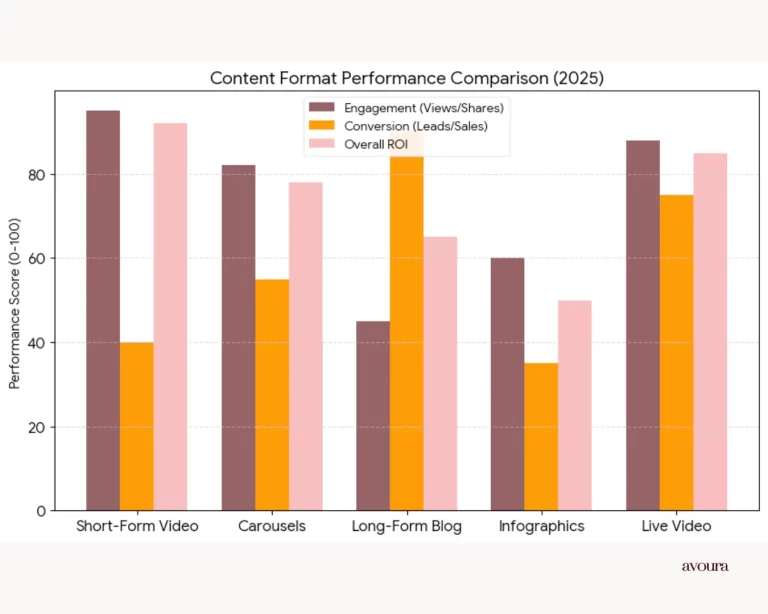
Short-form video has become one of the most effective formats on social media.
HubSpot research shows that short-form video delivers the highest ROI of any content format.
Effective short videos include:
- quick tips
- myth-busting
- founder insights
- customer education
- behind-the-scenes moments
Action step:
Create 2–3 repeatable video formats your team can produce consistently.
4. Plan Content With a Calendar
A content calendar helps maintain consistency and strategic alignment.
A simple calendar includes:
- date
- platform
- topic
- content pillar
- format
- CTA
Planning content in advance reduces last-minute pressure and ensures balanced messaging.
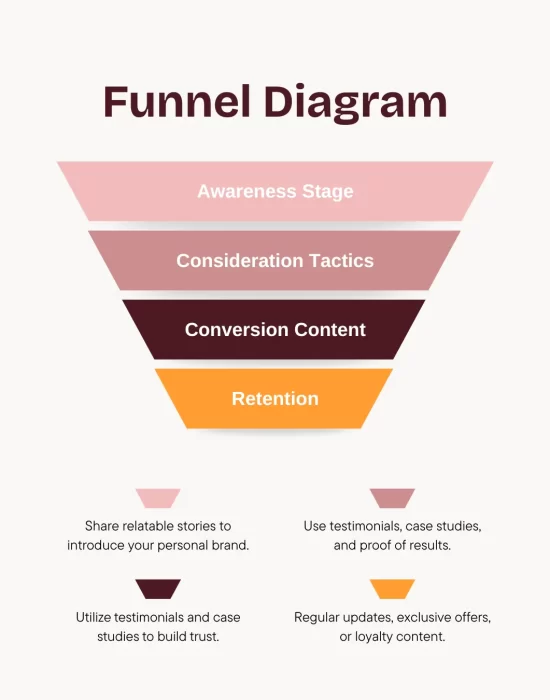
5. Match Content to the Customer Journey
Different content supports different stages of trust.
Balancing these stages ensures your content both attracts and converts.
6. Experiment With Formats
Different ideas perform better in different formats.
For example:
- a tip might work best as a Reel
- a framework might work best as a carousel
- a bold opinion might work best as a LinkedIn text post
Testing helps identify what resonates most with your audience.
Action step:
Test the same idea in multiple formats and compare engagement metrics.
Final Thoughts
A strong social media presence is not built by posting more content for the sake of it.
It comes from combining:
- a clear strategy
- a consistent and recognizable presence
- content that provides real value
With over 5.6 billion people active on social media, these platforms are now one of the most powerful environments for brand visibility and trust-building.
Businesses that approach social media strategically, rather than randomly – can turn their social presence into a long-term engine for growth.
Frequently Asked Questions About Social Media Presence
What is a social media presence for a business?
A social media presence refers to how a business appears and interacts across social platforms such as Instagram, LinkedIn, TikTok, and YouTube. It includes a brand’s visual identity, tone of voice, posting consistency, audience engagement, and the value of its content. A strong social media presence helps businesses build visibility, trust, and recognition online.
Why is social media presence important for businesses?
A strong social media presence helps businesses increase brand awareness, build trust with potential customers, and stay visible in a crowded digital environment. With more than 5.6 billion people using social media globally, platforms like Instagram, LinkedIn, and TikTok have become major channels for product discovery and customer research.
How often should a business post on social media?
Posting frequency depends on the platform and available resources. However, many businesses follow these general guidelines:
Platform: Recommended Frequency
3–5 posts per week
2–4 posts per week
TikTok
3–7 posts per week
YouTube
1–2 videos per week
Consistency is more important than volume. A sustainable posting schedule builds familiarity and trust over time.
What type of content performs best on social media?
Content that provides value tends to perform best. This includes educational posts, short-form videos, helpful tips, case studies, and behind-the-scenes insights. Research from HubSpot shows that short-form video currently delivers the highest return on investment among content formats.
What are content pillars in social media marketing?
Content pillars are the main themes that guide your social media content. They help businesses stay consistent and avoid random posting. Common content pillars include education, authority, trust, connection, and promotion.
How long does it take to grow a strong social media presence?
Building a strong social media presence usually takes several months of consistent effort. Growth depends on factors such as content quality, audience targeting, engagement, and platform algorithms. Businesses that post consistently and provide valuable content often see measurable results within 3–6 months.